Home > Products > Commercial Water Purifier > Desktop Commercial Water Purifier > Touch-operated Desktop Commercial Water Purifier
Touch-operated Desktop Commercial Water Purifier
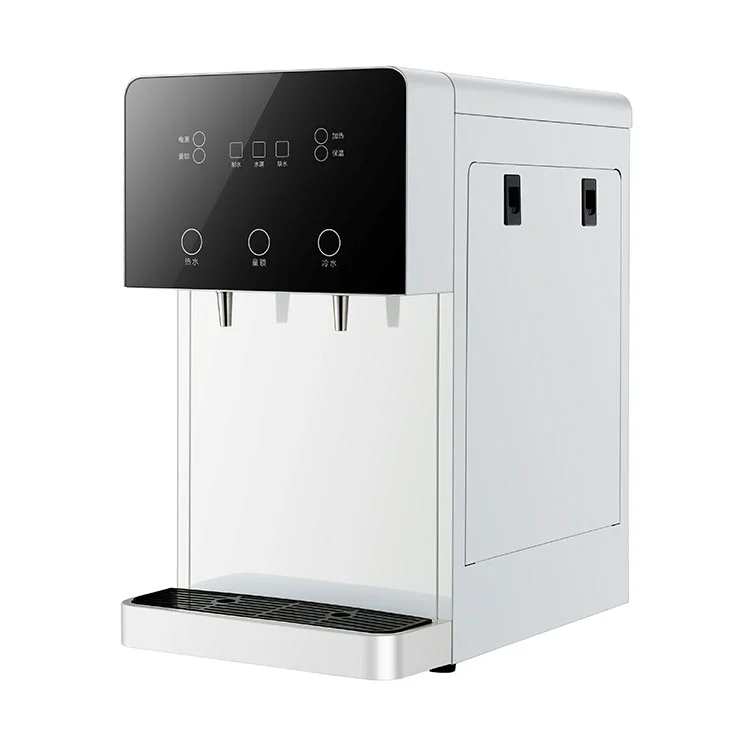
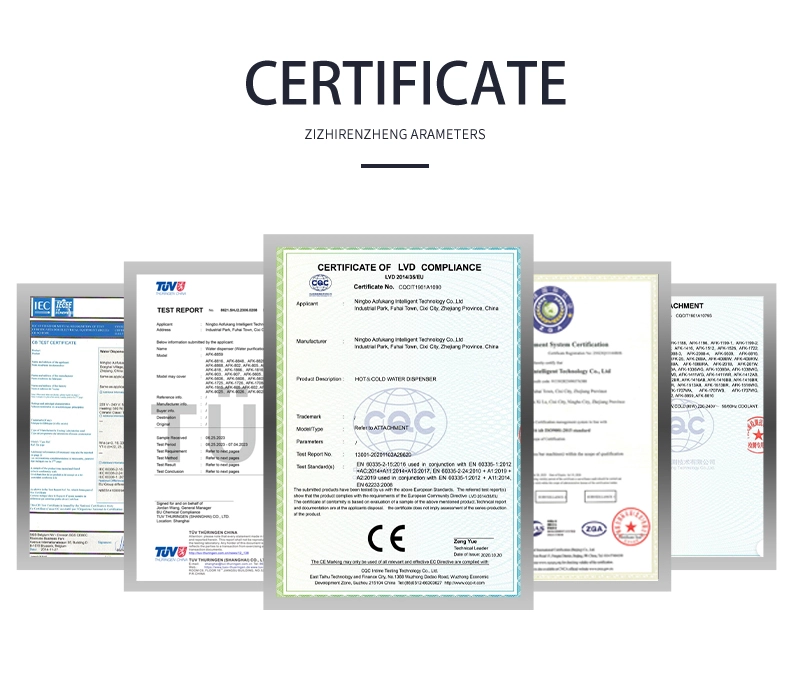
Ningbo Aofukang Intelligent Technology Co., Ltd. specializes in the production of water dispensers, holding international certification certificates CB and CE, adopting the ISO9001 management system, and providing customized OEM services to meet the needs of various countries for water dispensers.Touch-operated Desktop Commercial Water Purifier, installation-free water purification device designed specifically for commercial scenarios such as offices, stores and restaurants. Its core features include an intelligent touch control panel, multi-stage deep filtration and integrated hot and cold water functions. It can be directly connected to tap water and produce purified hot water, room temperature water or ice water for direct drinking with one touch.
Send Inquiry
Product Description
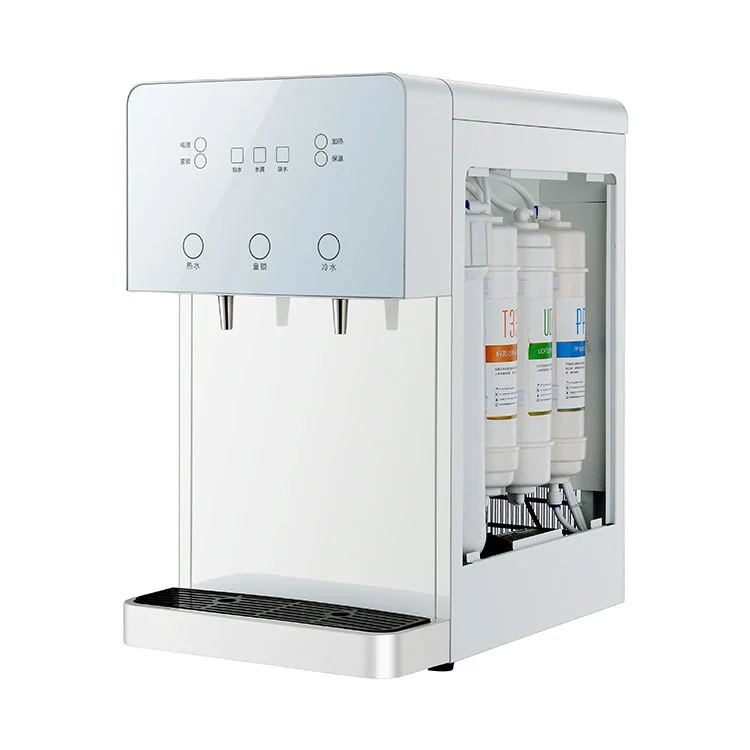
The AFK-118 is a Touch-operated Desktop Commercial Water Purifier assembled at Ningbo Aofukang Intelligent Technology Co., Ltd. in Cixi. It sits on a countertop and connects to a mains water line, using a 100‑GPD RO membrane with PP, CTO, and T33 stages to supply up to 15 litres of hot water (≥90 °C, 800 W) and cold water (≤10 °C, 90 W compressor) per hour. A touch‑screen panel handles temperature selection, fixed‑volume or continuous dispensing, and displays TDS and water temperature. The cabinet is galvanised steel with stainless steel panels; the internal hot‑water tank is 304‑grade stainless. A child lock can be enabled for the hot‑water function. Production follows ISO9001:2015 procedures, and CE, CB, and RoHS documentation is maintained.
Product Parameter
| Model | AFK-118 |
| Filter | PP + CTO + RO + T33 |
| Water Temperature | Hot / Cold |
| Water Spout | 2 |
| Child Lock | Yes |
| Cooling Method | Compressor Cooling |
| Rated Voltage / Frequency | 220-240V 50/60Hz |
| Heating Power / Capacity | 800W / 15 L/h (≥90℃) |
| Cooling Power / Capacity | 90W / 2.0 L/h (≤10℃) |
| Purified Water Flow | 100 GPD |
| Product Dimensions | 420 × 295 × 520 mm |
| Packing Dimensions | 510 × 360 × 580 mm |
| Package | 5-Layer Brown Carton Box |
| Body Material | Galvanised Steel + Stainless Steel |
| Display Type | LED Digital Screen (Touch Panel) |
Build & Desktop Footprint
Measuring 420 mm wide by 295 mm deep, the AFK-118 occupies roughly the same counter space as a large microwave. The body panels are galvanised steel with a stainless steel front; the surface coating resists rust and can be wiped with standard cleaning agents. At 520 mm tall, the dispense spout sits above most cups and bottles placed on the drip tray without requiring users to stoop.
Inside, the hot‑water reservoir is made from 304 food‑grade stainless steel with argon‑arc welded seams. The 15‑litre‑per‑hour heating output is designed for small to medium commercial settings—a convenience store backroom, a reception counter, or an office pantry serving 10–15 people. The compressor is a sealed 90 W unit; ventilation grilles on the rear and sides should be kept clear by at least 10 cm.
Touch Panel & Dispensing Functions
The front panel houses a touch‑sensitive LED screen. Users select hot or cold water, choose between a preset volume or continuous pour, and read current TDS and outlet temperature on the same display. A filter‑replacement icon illuminates when cartridges near the end of their rated life.
A child lock can be enabled for the hot‑water circuit via the touch screen. When active, hot‑water dispensing requires an additional confirmation tap, reducing the chance of accidental operation in public or high‑traffic areas. The lock does not affect cold‑water dispensing.
RO Filtration & Performance
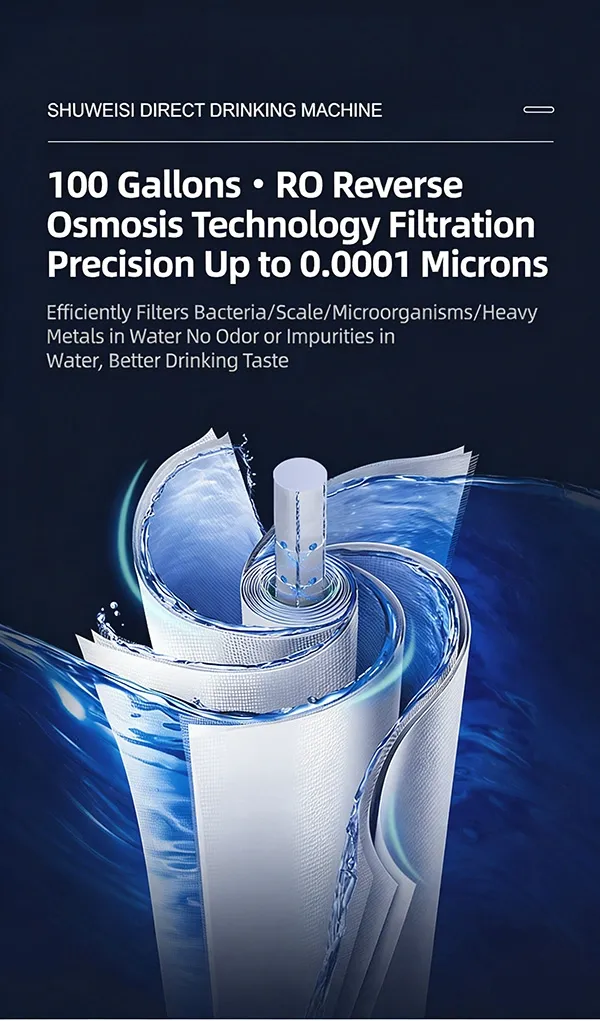
Water passes through four stages: PP sediment → CTO carbon block → 100‑GPD RO membrane → post‑T33 carbon. The RO stage removes 95–99% of dissolved solids, heavy metals, and microorganisms. The wastewater ratio is set to approximately 1:1 at the factory; this can be verified on‑site with a simple graduated‑cylinder measurement if feed‑water conditions differ from standard municipal supply.
The pre‑filters (PP and CTO) are recommended for replacement every 6–12 months. The RO membrane typically lasts 2–3 years, and the post‑T33 carbon around 12 months. The filter‑change prompt on the display provides a visual cue when each interval is approaching.
Installation & Utilities
The AFK-118 requires a mains cold‑water feed and a standard 220–240 V electrical outlet. A drain connection for the RO concentrate line must be available within reach of the supplied tubing—typically a sink drain or a dedicated waste pipe. The unit ships with connection fittings and a drip tray. Once connected, the water line remains pressurised; the RO membrane and storage tank refill automatically after each dispense.
Placing the unit on a level countertop is important: the internal float valves rely on gravity to function correctly. The supplied anti‑slip feet can be adjusted to compensate for minor surface unevenness.
Factory Certifications & Quality
Each AFK-118 is inspected before packing: a water‑circuit leak test, an electrical safety check (ground bond and insulation), RO output verification, and a heating/cooling cycle test. The certificates below are held by Aofukang and apply to this model.
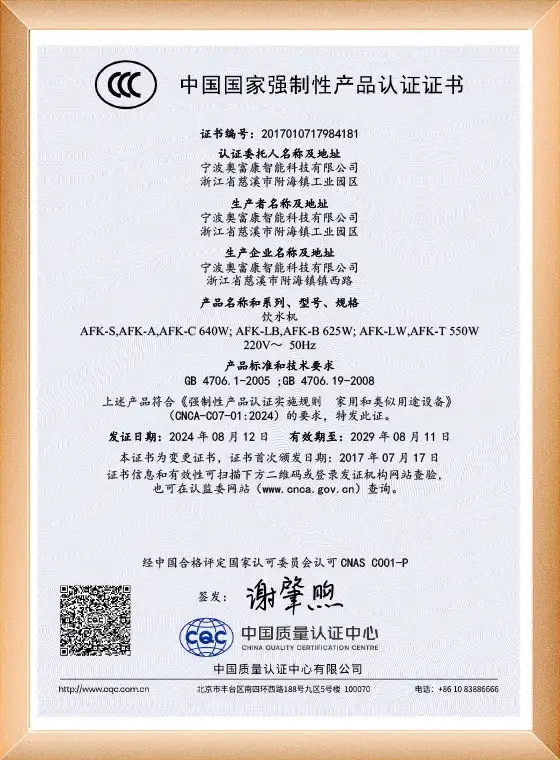
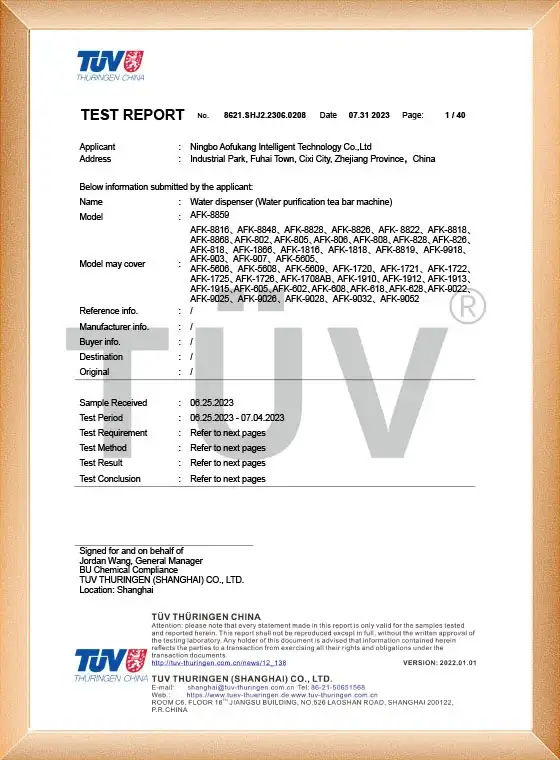
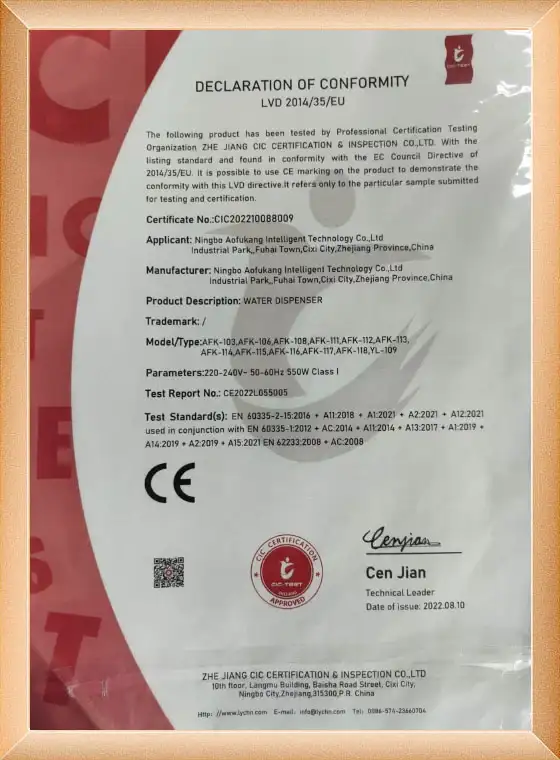
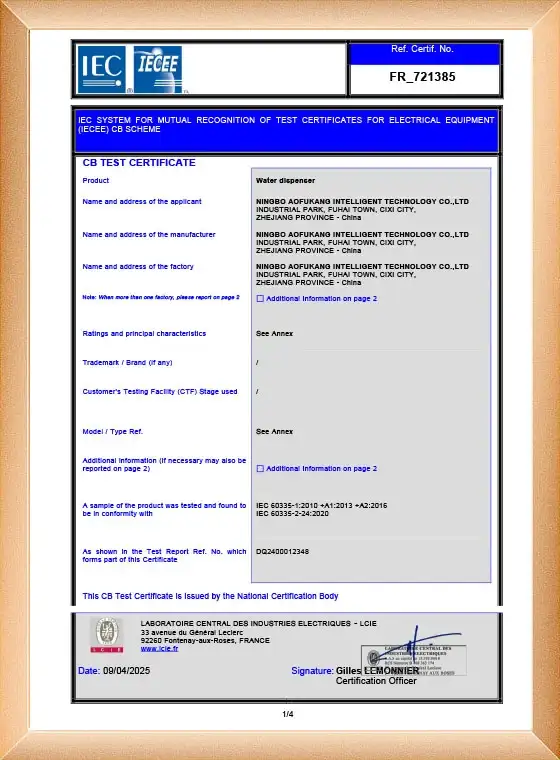
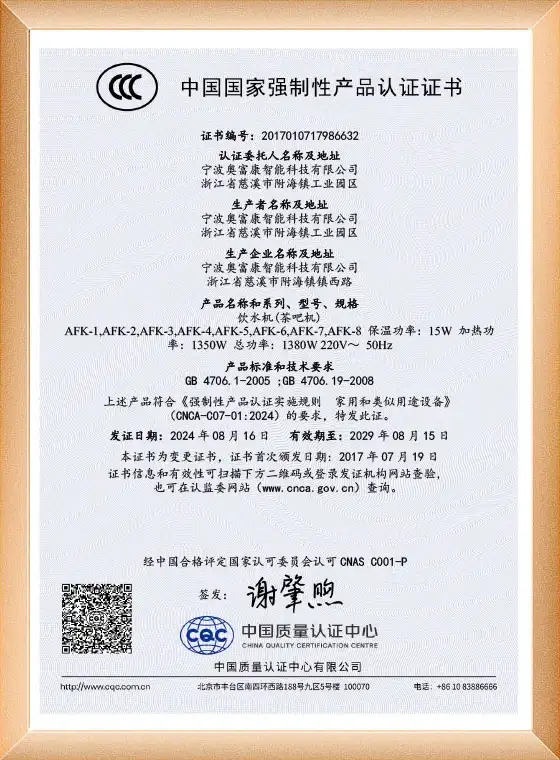
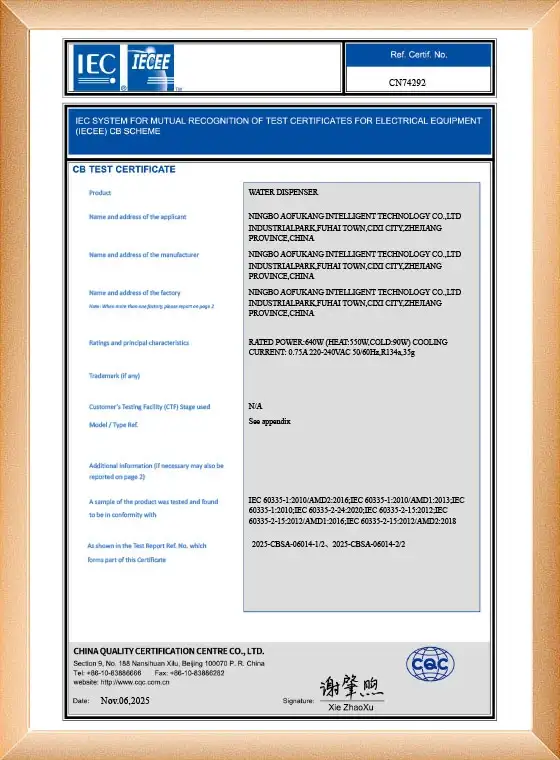
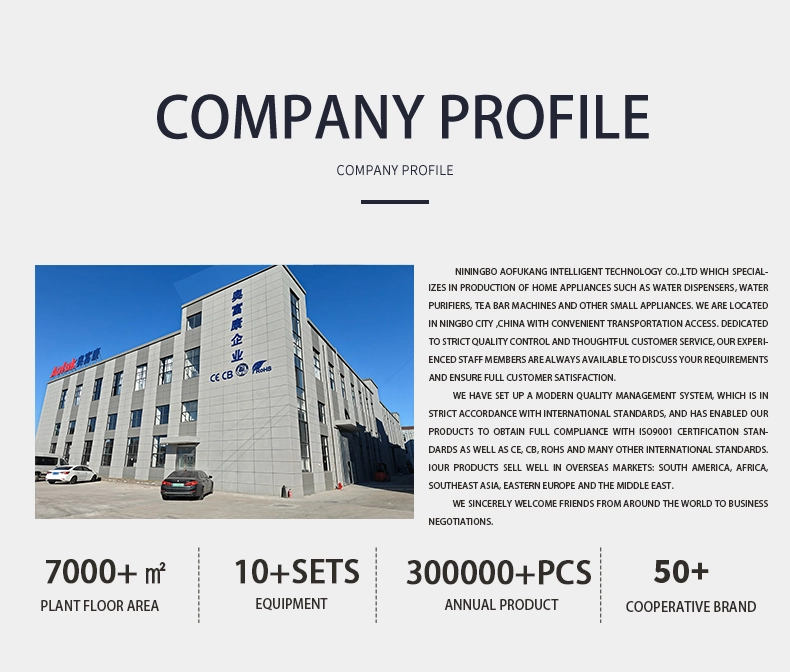
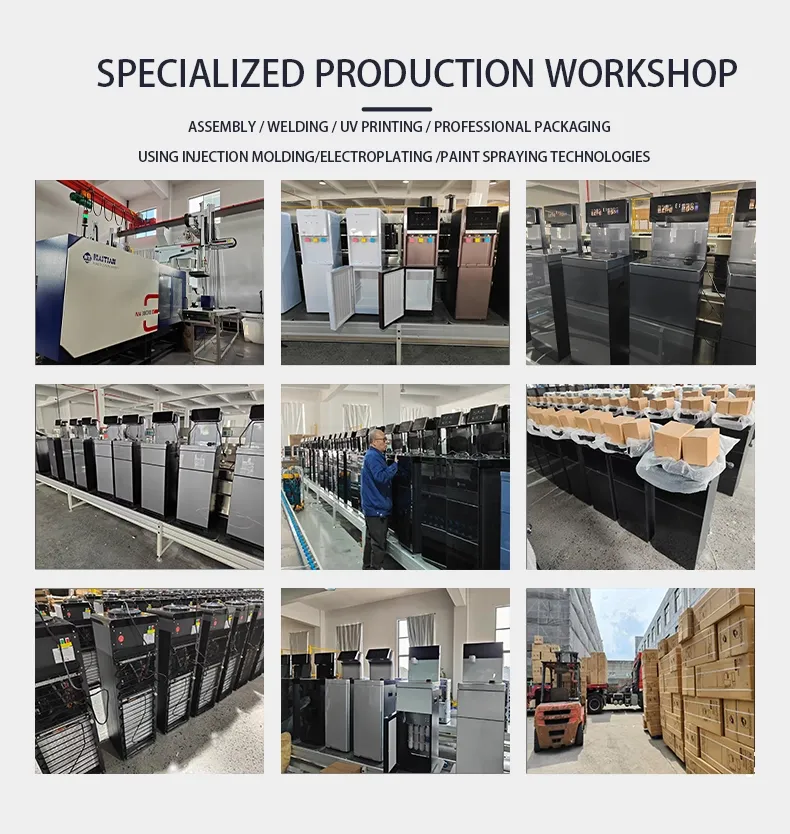
The Cixi factory covers 7,153 m², runs 6 assembly lines, and produces over 300,000 units annually. In‑house sheet‑metal fabrication and injection moulding provide direct control over the steel body and plastic components. OEM customisation—branding, voltage, packaging—is supported with a minimum order quantity.
Frequently Asked Questions
Q: Does the touch screen still work if the panel gets wet?
A: The touch panel is sealed against minor splashes, but it is not fully waterproof. Wiping it with a damp cloth is fine; pouring water directly onto the screen should be avoided. If moisture enters the edges, drying the surface with a soft cloth restores normal operation.
Q: Can fixed‑volume dispensing be adjusted to custom amounts?
A: The unit comes with several preset volume options (e.g., 150 ml, 300 ml, 500 ml). Custom volumes are not user‑programmable on the standard model. For larger or irregular containers, the continuous‑pour mode lets users stop the flow manually at any point.
Q: How often should the drip tray be emptied?
A: The drip tray holds about 300 ml of spillage. In a busy office or retail setting, checking it at the end of each day is recommended. It slides forward without tools and can be rinsed under a tap.
Q: Is there any indicator when the RO membrane needs replacing specifically?
A: The filter‑replacement icon on the display covers the combined filter set. If the TDS reading on the screen begins to rise noticeably (e.g., above 50 ppm from a steady historical value), the RO membrane is likely approaching the end of its service life, even if the icon has not yet illuminated.
Product Gallery
Hot Tags: Touch-operated Desktop Water Purifier Manufacturer, Commercial Water Purifier Supplier, Desktop Water Purifier Wholesale
Related Category
Send Inquiry
Please Feel free to give your inquiry in the form below. We will reply you in 24 hours.
Related Products